Medical training should solve a real workforce need
International medical training is most valuable when it is designed around a clear professional objective. Sending a delegation abroad without defining what participants should learn can produce an impressive itinerary but limited long-term value. The first question should therefore be: what should participants be able to understand, observe or improve when they return to their institution?
For an individual clinician, the objective may be exposure to a particular clinical pathway. For a hospital, it may be improving nursing practice, patient flow, infection control, biomedical maintenance or hospital management. For a ministry or university, the objective may be broader capacity building for a cohort of professionals.
Who can benefit from programmes in Türkiye?
Programmes can be designed for physicians, nurses, allied healthcare professionals, biomedical and technical teams, healthcare managers, administrators, faculty members and multidisciplinary groups. The participant profile should determine the learning format.
A senior specialist does not need the same programme as a newly qualified professional. Likewise, a hospital management delegation should not be placed into a purely clinical observership. Matching participants to the right learning environment is the foundation of a serious programme.
Common programme formats
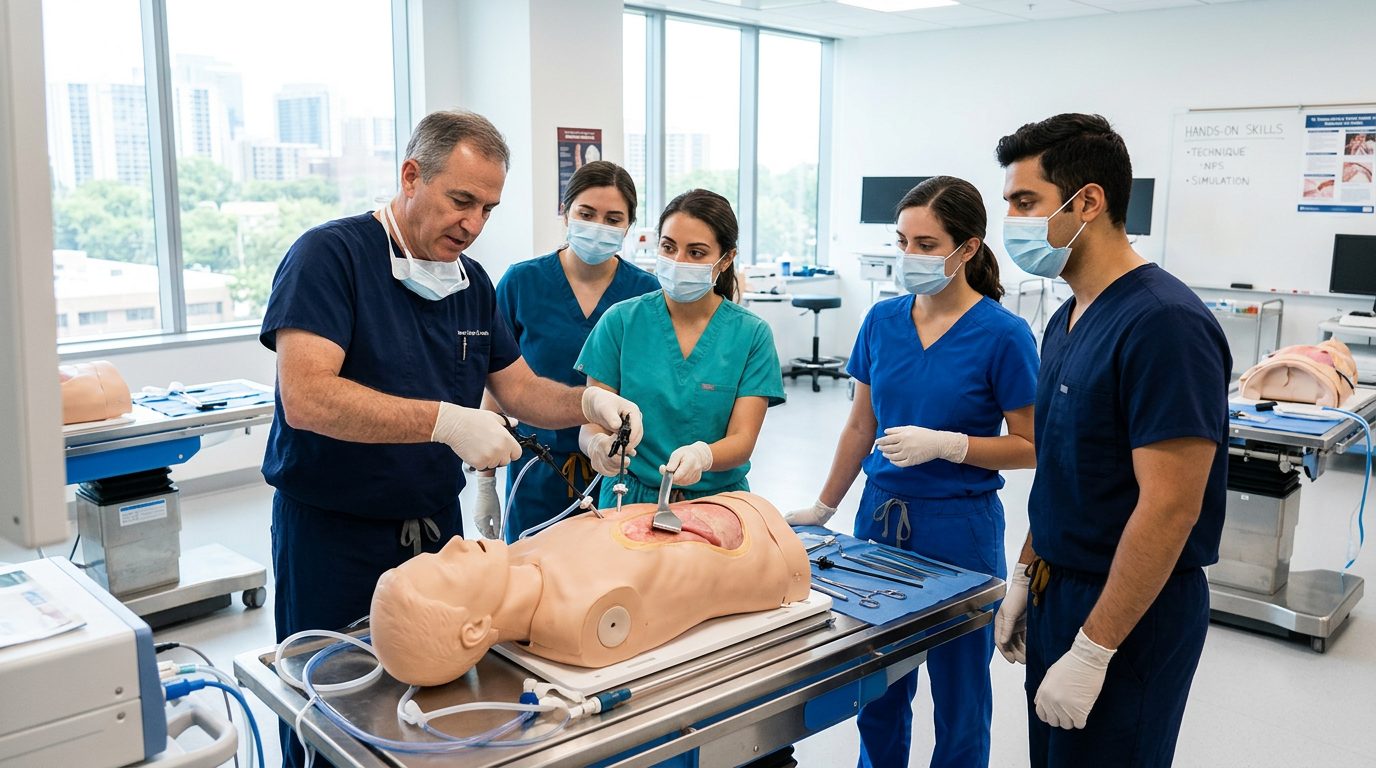
Professional programmes can include clinical observerships, structured workshops, case-based teaching, simulation, hospital management sessions, technical demonstrations, academic meetings, site visits and customised institutional modules. Depending on the subject and host rules, some programmes may include practical elements while others are strictly observational.
The exact scope must be agreed in advance. Terms such as “hands-on” should not be used casually, especially in clinical settings where patient safety, professional licensing, supervision and institutional policy determine what a visiting participant is permitted to do.
How to design a customised programme
A useful training brief should describe the participating institution, number of participants, professions and specialties, level of experience, desired dates, preferred duration and learning objectives. It should also identify any specific equipment, procedure, clinical pathway or management process the group wants to understand.
From this brief, a programme can be structured into learning blocks rather than simply a list of visits. For example, a five-day hospital management programme might combine leadership, patient experience, quality systems, digital workflow, procurement and a structured site observation. A clinical programme may combine multidisciplinary meetings, department observation and academic discussion.
Observership versus practical training
An observership allows professionals to learn by watching clinical or organisational practice within the limits set by the host institution. It does not automatically grant the right to perform procedures or provide patient care. Practical training, where available, requires a different structure and may involve simulation, supervised technical demonstration or other controlled educational formats.
This distinction should be clear in proposals, invitation documents and certificates. Participants and sponsors need to know exactly what the programme provides.
Institutional programmes for groups
Group programmes can be especially effective for hospitals, universities and public institutions because participants return with a shared experience and can work together on implementation. A group programme can also be tailored to different roles within the same organisation.
For example, clinicians may focus on clinical pathways while managers study operational systems and biomedical staff examine equipment management. Joint sessions can then bring the group together around institutional priorities.
Certificates and learning evidence
A certificate can be useful, but the educational value of a programme should not be reduced to receiving a certificate. Institutions should define attendance requirements, learning objectives and, when appropriate, assessment or reflective outputs.
For sponsored programmes, a post-training report can help demonstrate value. Participants may document key observations, lessons relevant to their home institution and proposed actions. This transforms an international visit into a capacity-building project rather than a one-time event.
Building long-term Türkiye–Africa healthcare cooperation
The greatest value often comes when a programme becomes the beginning of an institutional relationship. A hospital or university may later request follow-up training, technical cooperation, remote academic sessions or a more advanced second cohort.
Turquaz Health structures professional medical training as part of wider healthcare cooperation. The aim is to connect institutions with appropriate educational environments in Türkiye while keeping the programme aligned with the participant group’s actual needs.
Medical information notice
This article is for general information and does not replace individual medical advice, diagnosis or treatment. Medical decisions should be made by appropriately qualified healthcare professionals after reviewing the individual patient.
Your next step
Hospitals, universities, ministries and healthcare organisations can request a customised programme by sending the participant profile, target subject, preferred duration and expected learning outcomes to Turquaz Health.
Get a free consultationEditorial references
- CDC Yellow Book — Study Abroad and Other International Student Travel (occupational and exposure considerations for medical and nursing learners abroad).